
John Saunders reports:Top seed Fabiano Caruana scored another stunning victory in round two of the FIDE Grand Swiss on Thursday 26 October at the Villa Marina, Douglas, taking himself back above 2800 on the unofficial live rating list. He defeated a fellow US grandmaster, Hans Niemann, and is now amongst seven players on the maximum score of 2/2. In the Women’s Grand Swiss, the numbers 4 and 5 seeds, Tan Zhongyi and Anna Muzychuk, are setting the pace, along with three other players with maximum scores.
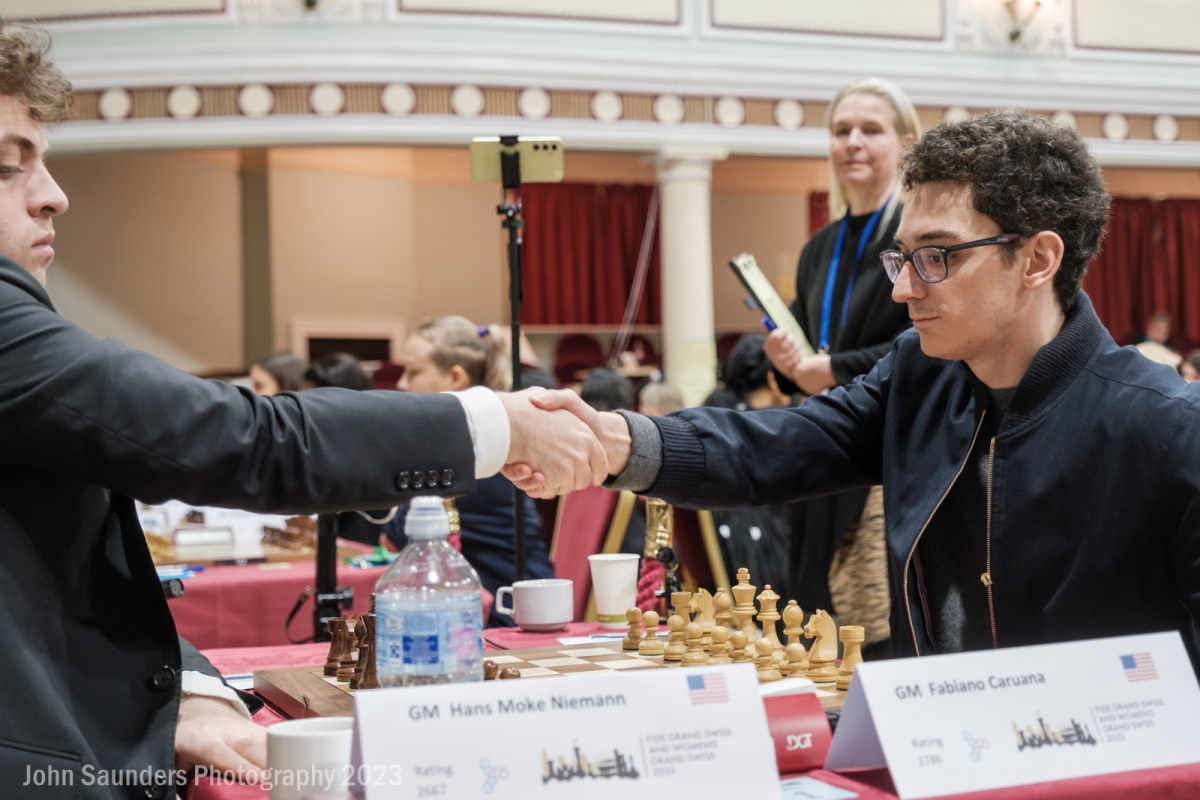
Handshake before the all-American game between Fabiano Caruana and Hans Niemann
Caruana-Niemann was a Berlin Ruy Lopez in which White retained a tiny positional edge until move 22 when the careless 22…Qa6 left the black queen out of the game and instantly increased White’s advantage. A player of Caruana’s was never likely to miss such an opportunity: he soon won a pawn, and his immaculate technique did the rest. This second win puts him at 2801 on the live ranking list, the first time he has been at this level in around two years. It puts him within 26 points of Magnus Carlsen ’s rating. Carlsen’s retirement from world championship chess seems to have given Caruana’s game a shot in the arm, broadly comparable to the one which gave Vishy Anand wings once he had seen Garry Kasparov quit the game.
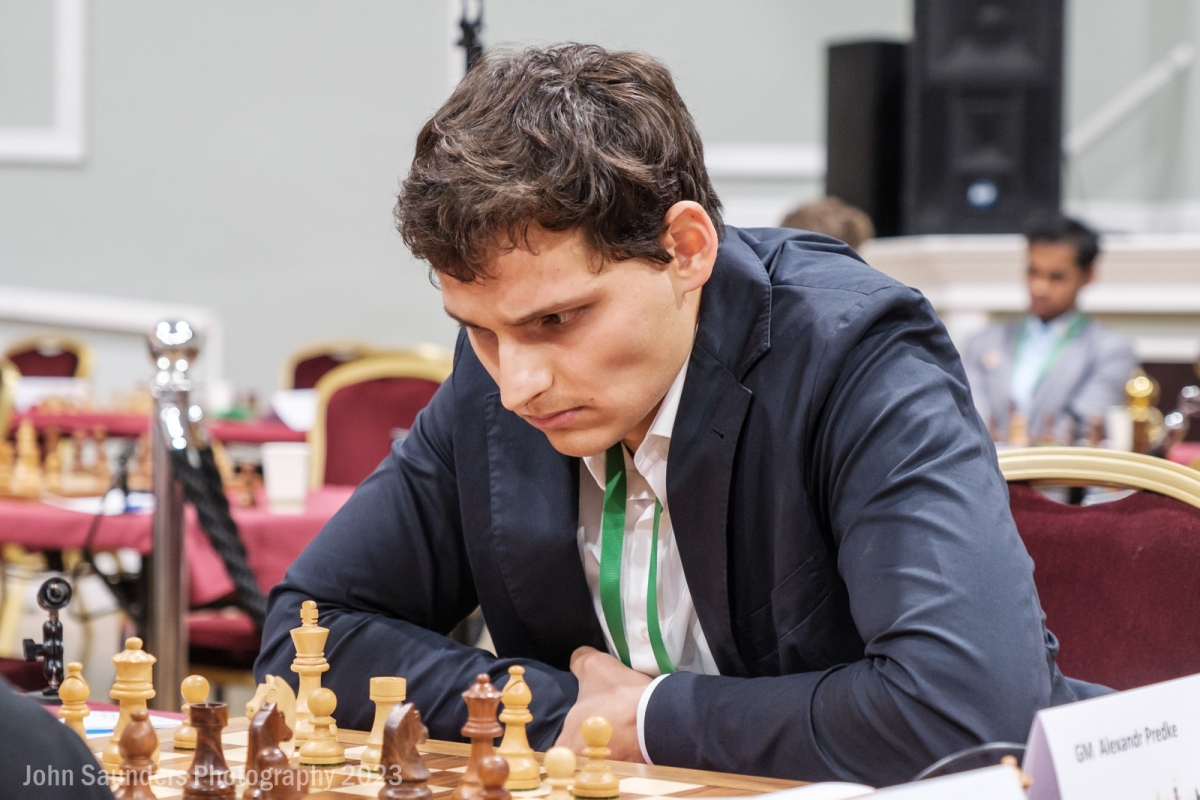
Serbian GM Alexandr Predke scored a surprise win against Jan-Krzysztof Duda
The top ten boards featured one shock result when tenth ranked Jan-Krzysztof Duda succumbed to Serbian GM Alexandr Predke. Duda defended a Queen’s Gambit Accepted but allowed too big a build-up of pieces against his king whilst attempting a naïve-looking queen excursion to grab pawns on the queenside.
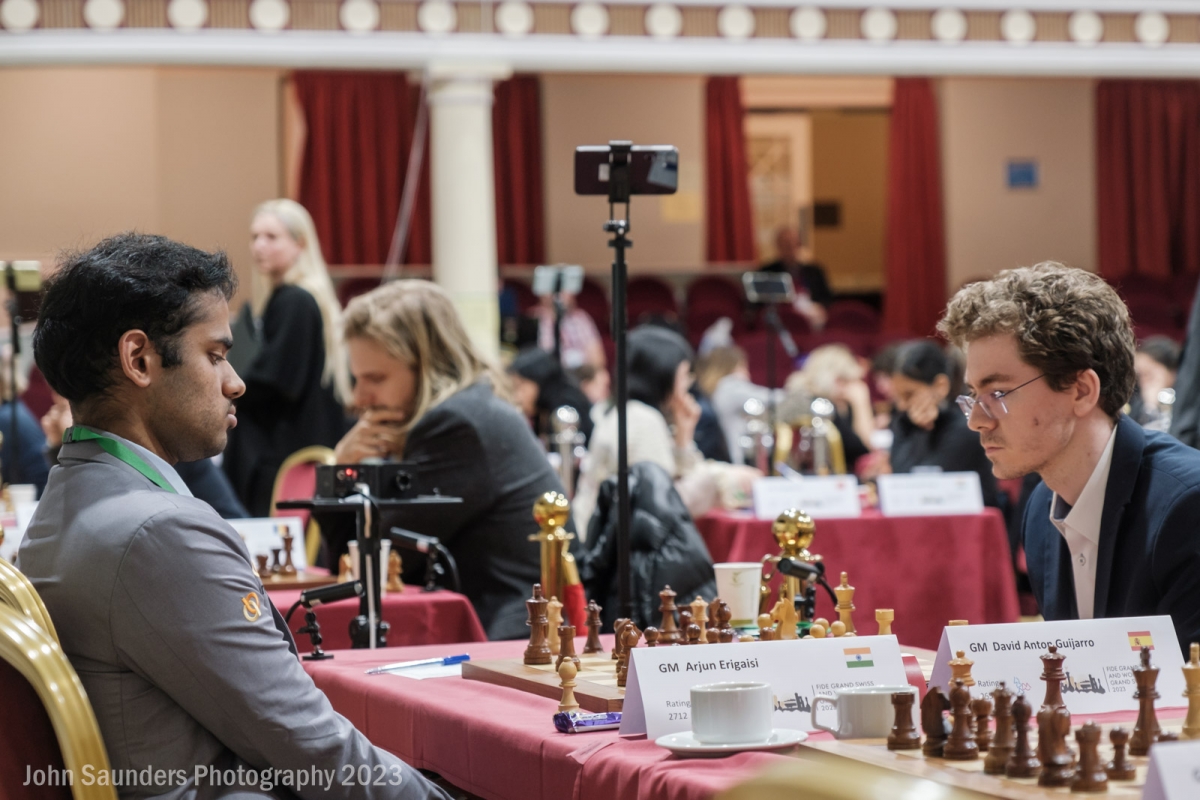
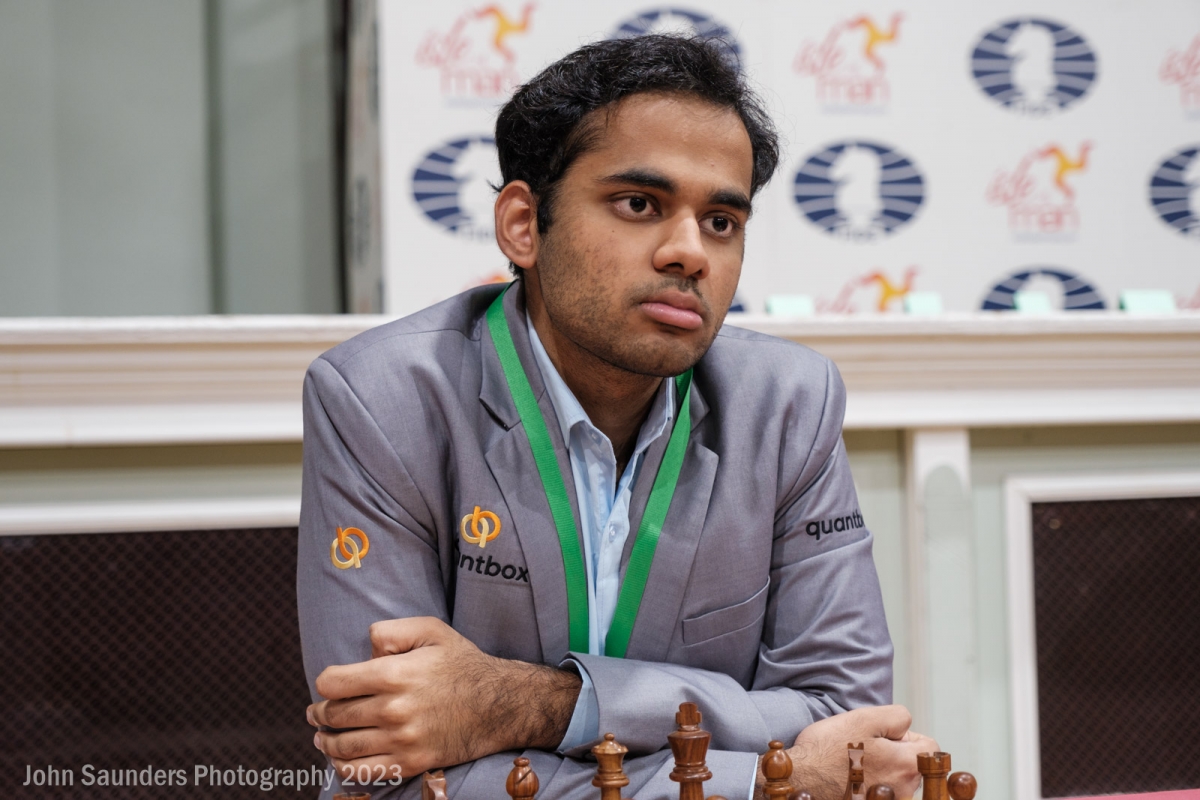
Arjun Erigaisi is in excellent form as the FIDE Grand Swiss gets underway: a possible Candidate?
Spanish GM David Anton Guijarro tried a sort of English/Catalan against Arjun Erigaisi but soon found himself in the sort of passive position that is typical of the black side of a King’s Indian Defence. Like Duda, Anton Guijarro captured a queenside pawn with his queen where it was left out of play, but Erigaisi followed up with a tactic which netted two pieces for a rook. In truth, the Spaniard’s game was already critical by this time and it may have been his best hope. He managed to exchange queens to keep himself in the game, but the resultant position proved too difficult to hold. Erigaisi’s play looked assured, and he looks a strong tip to challenge for top honours in this event despite his youth.
For the second round running Erwin L’Ami defied the rating list, adding the scalp of Vladimir Fedoseev (only nine points shy of 2700) to that of Gujrathi Vidit from the first round. It would be wrong of me to refer to the genial Dutch GM as a ‘veteran’ as he’s only 38, but he’s approaching that status in the increasingly youthful world of elite chess. It has to be said that it owed something to fortune as L’Ami had a ruinous position in the middlegame but somehow Fedoseev faltered and missed a number of good chances. By the time control the position had turned through 180 degrees. The game went to 92 moves but the result never looked in much doubt for the last half of the game.
After his heroics in round one, England’s Shreyas Royal was served up another monster in round two, 2682-rated Alexey Sarana. This one proved indigestible. Royal, playing Black, found himself squeezed in the opening and tried to get some play with a pawn sacrifice. It looked hopeless at one point, but he fought his way back into the game, though still a pawn down. The position looked hard to win for White, but it was also hard to defend and eventually Black came unstuck.
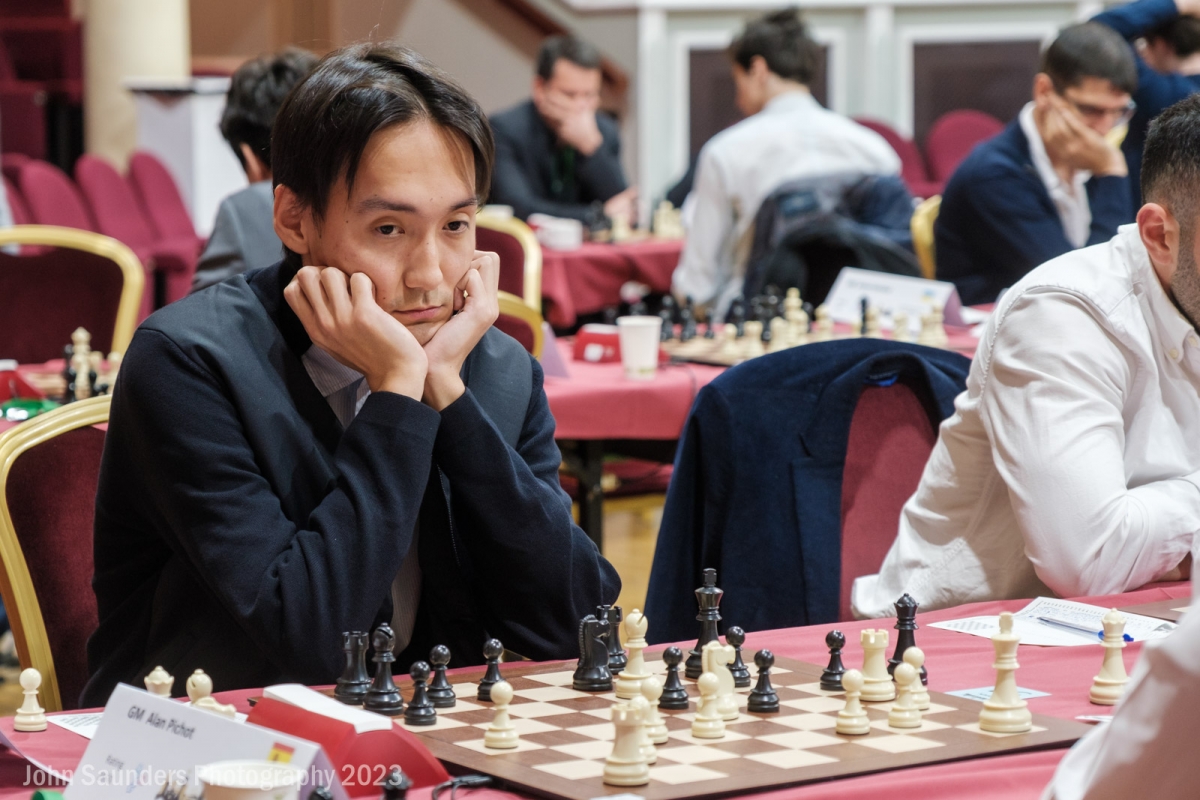
Ramazan Zhalmakhanov is a name to watch: he’s impressed in the FIDE Grand Swiss so far
Ramazan Zhalmakhanov is a new name on me, and one that is hard to spell. (I’ve added a short cut for him to my Microsoft Word dictionary as the 21-year-old Kazakh player is clearly very talented and I would expect to have to write his name again in the future.) With two wins under his belt against 2650+ grandmasters, I can’t imagine RZ will remain an IM much longer. His victim in round two was Egyptian GM Bassem Amin. Zhalmakhanov opened with a Ruy Lopez and applied what we cliché-loving chess scribblers usually refer to as ‘Spanish torture’. The crunch came when White menaced an f4-knight with 29 g3, leaving the h3-pawn en prise. Bassem Amin was unwise enough to take it but was punished by a none too complicated tactic which cost him two minor pieces for a rook. Having suckered Black once, White cheekily thought he’d try again on move 40, this time offering a knight as bait. This time Black didn’t fall for the cheapo, but it didn’t make any difference because he was dead lost anyway and had to resign a move or two later.
The seven players on 2/2 are Alexandr Predke (Serbia), Erwin L’Ami (Netherlands), Ramazan Zhalmakhanov (Kazakhstan), Fabiano Caruana (USA), Arjun Erigaisi (India), Andrey Esipenko (FIDE) and Alexey Sarana (Serbia).
—
Round 2 Report: Women’s Grand Swiss
The FIDE Women’s Grand Swiss is headed by Meruet Kamalidenova (Kazakhstan), Tan Zhongyi (China), Anna Muzychuk (Ukraine), Antoaneta Stefanova (Bulgaria), and Irina Bulmaga (Romania) with 2/2. The first-named is currently a woman grandmaster but overcame a full GM, Valentina Gunina, in this round. Gunina defended a Caro-Kann but spoilt her position after making a promising pawn sacrifice, eventually losing in a rook versus queen endgame.
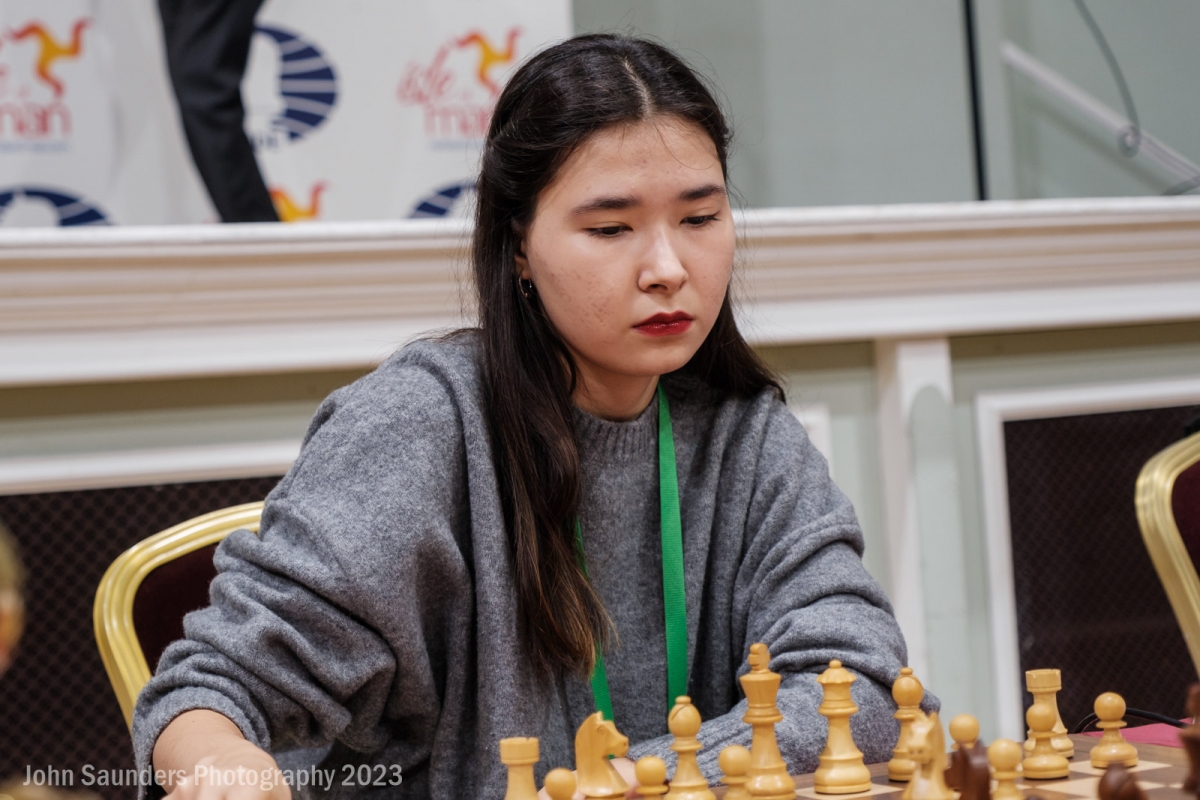
WGM Meruet Kamalidenova, Kazakhstan, is just 18 years old.
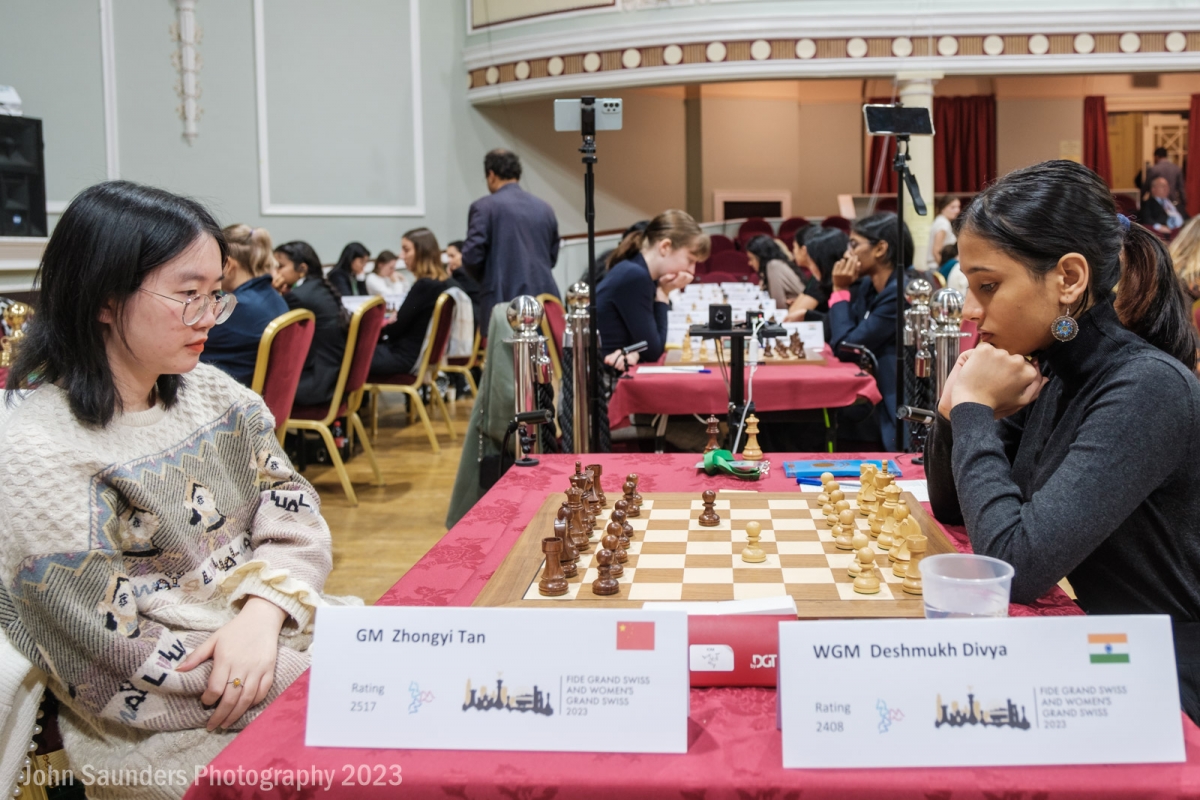
Tan Zhongyi was in determined mood against the young Indian player Divya Deshmukh
Tan Zhongyi ’s win with Black against Divya Deshmukh of India was a typically gritty effort from the former women’s world champion. She demonstrated excellent technique in a rook and bishop versus rook and knight endgame.
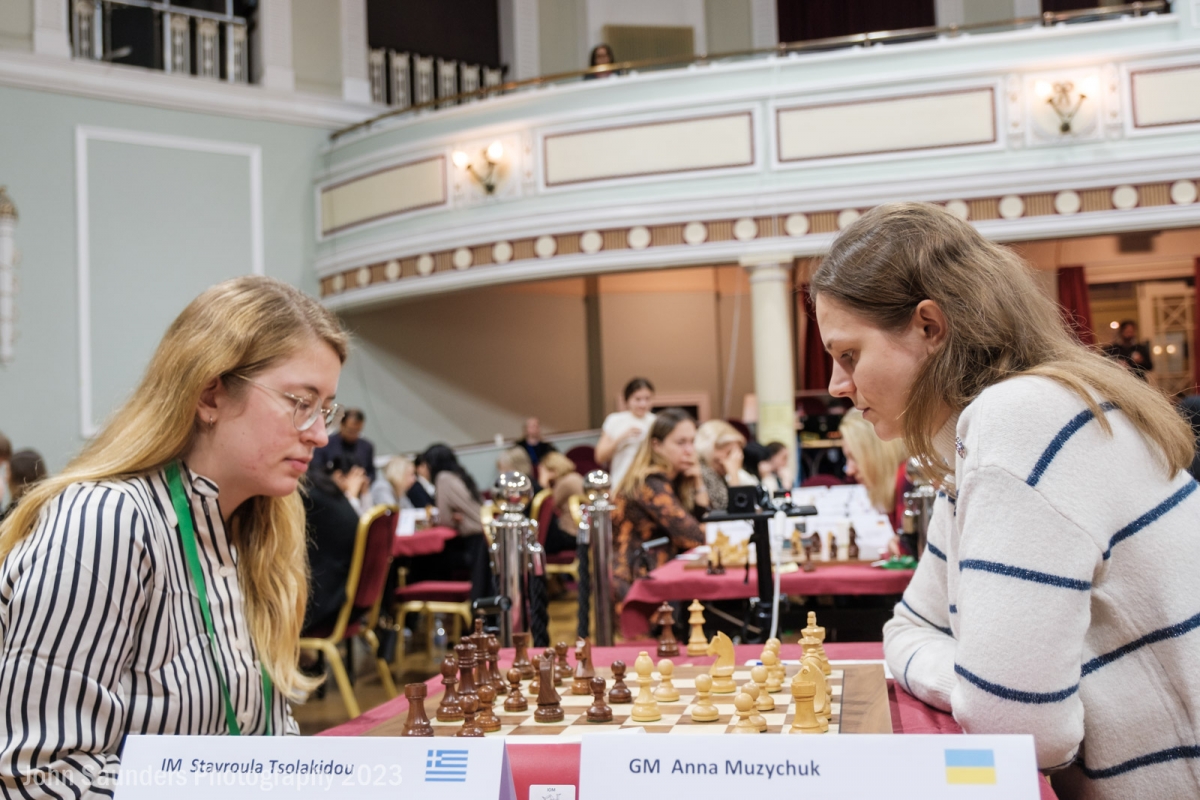
Anna Muzychuk vs Stavroula Tsolakidou ended with a blunder but featured a fascinating tactical episode which you can see below
The game between Anna Muzychuk and Stavroula Tsolakidou was eventually decided by a horrendous blunder when the Greek player left a whole rook en prise on move 40 in a level position. It wasn’t the first mistake of the game, though previous oversights by both players weren’t anything like as obvious as the final one.
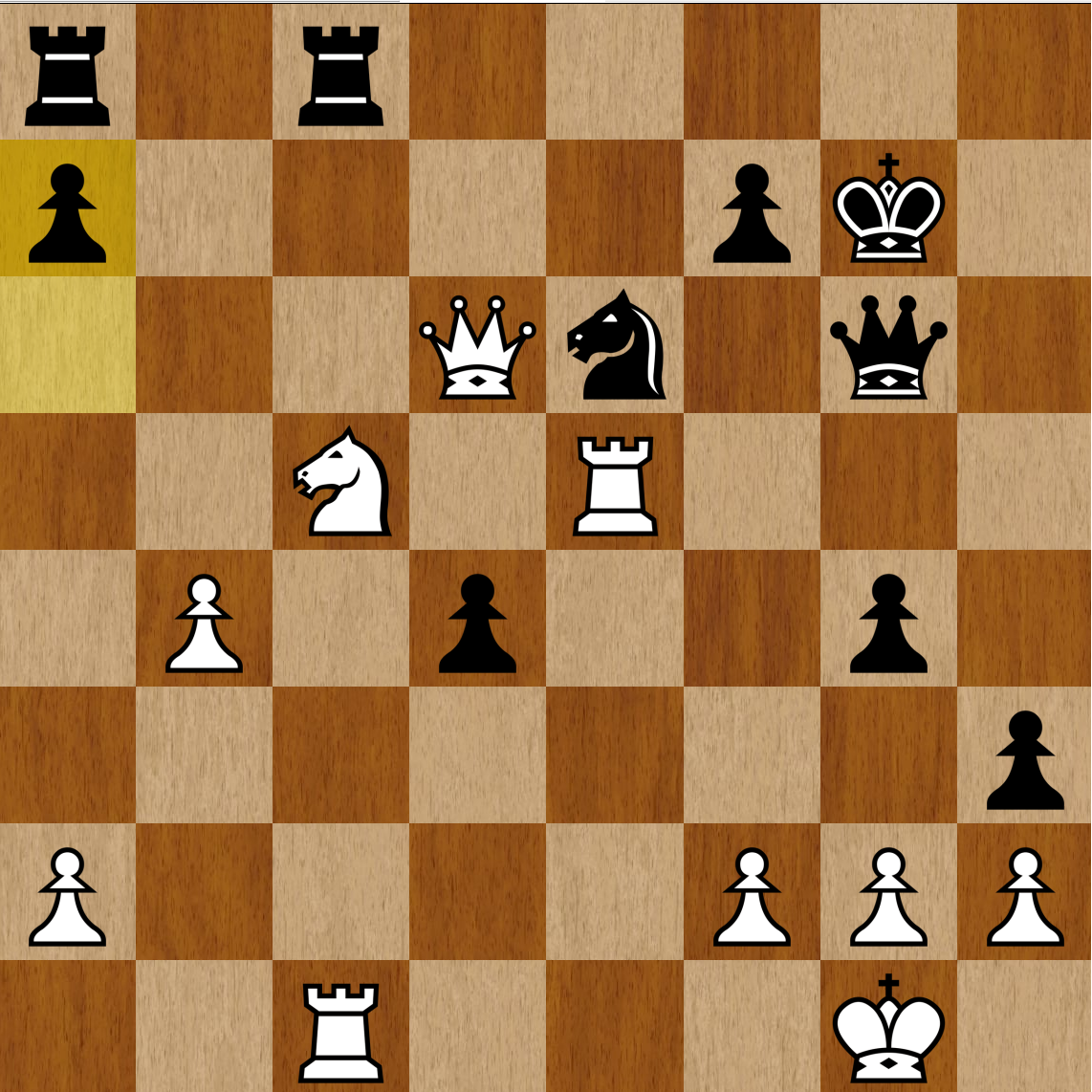
In the above position Black played 33…Nxc5 when, instead of exchanging queens, after which the game would have been level, White chose 34 Qxd4 – an intermezzo move threatening a deadly-looking discovered check with the rook. White continued 34…Nb3, which successfully stymies the discovered check threat and creates a back rank mate threat for herself. However, White found a way out: 35 axb3 Rxc1+ which looks like a back rank mate until you notice that the reply 36 Re1 gives check to the black king, after which the game continued 36…Kg8 37 Rxc1, etc.
However, back at move 34, Black could have played the incredible 34…Nd7!! which allows the discovered check – but, despite having that usually devastating weapon at her disposal, White is completely lost. Here’s what that position would have looked like
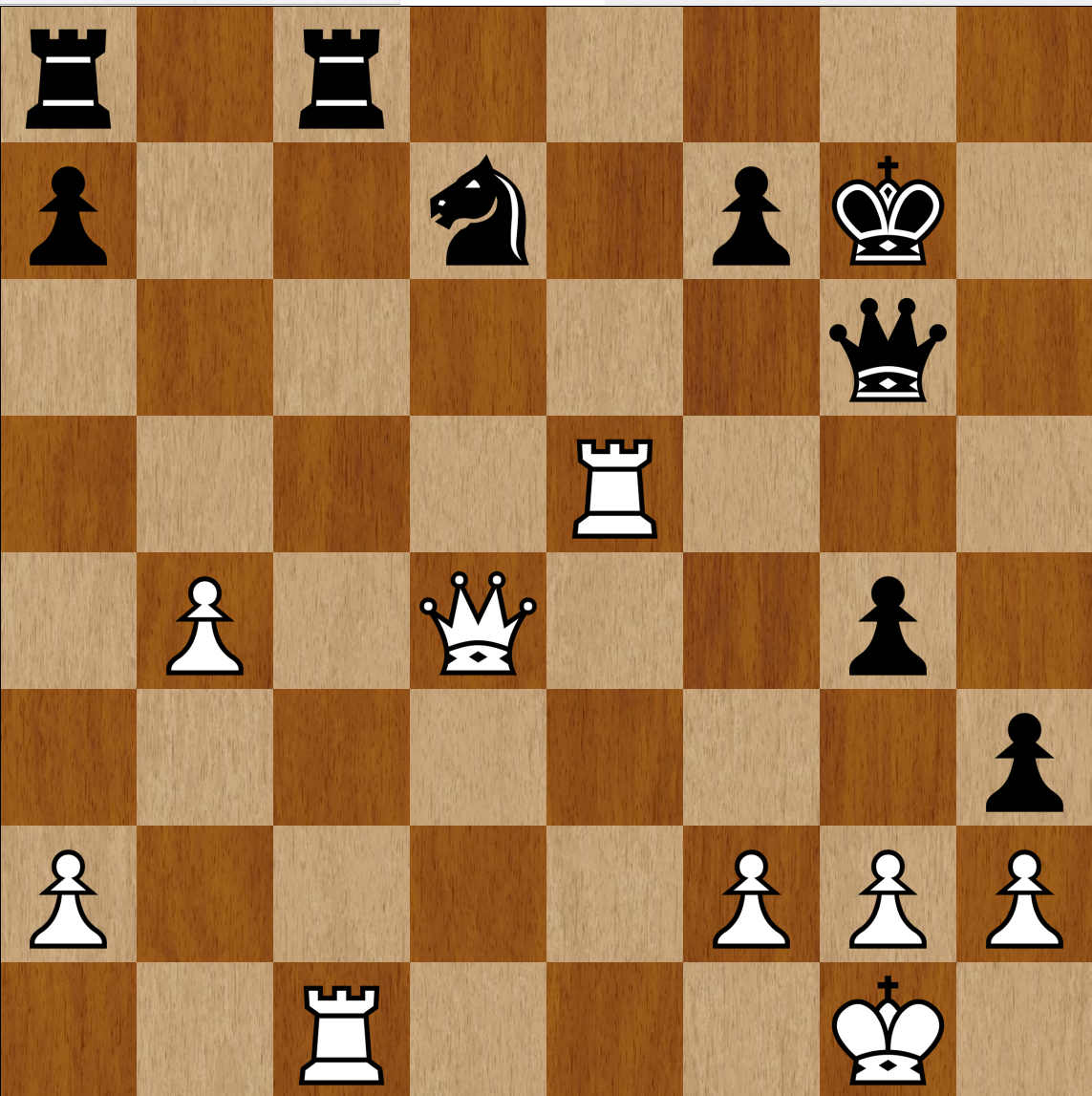 White to move – and lose!
I’ll leave the reader to figure it all out. In reply to many of the rook moves, Black simply plays 35…Nf6 and preserves the extra piece, but some require more subtle replies. Of course, it takes time to investigate all the possibilities, and time is what the two players didn’t have. No need for them to beat themselves up for missing this, of course.
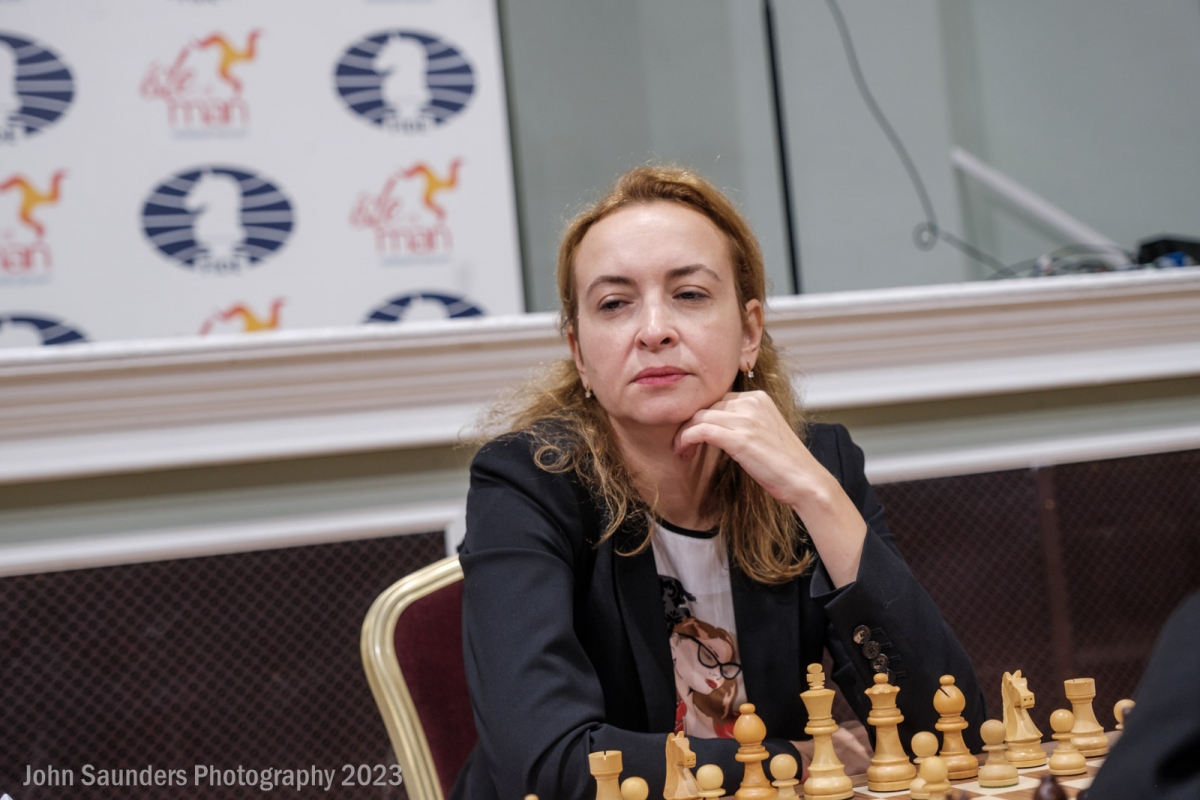
Semi-retired from chess, but still a formidable competitor: former world champion Antoaneta Stefanova
Antoaneta Stefanova is an ex-world champion with less time for chess these days but remains a formidable player. She embarked on a risky pawn-grabbing mission in the early middlegame for which her opponent, the 16-year-old Indian WGM Shri Savitha, obtained promising counterplay. However, once Stefanova had finally developed her pieces the position settled down. A draw was the likeliest outcome but Savitha played a little too optimistically and found herself in a lost endgame.
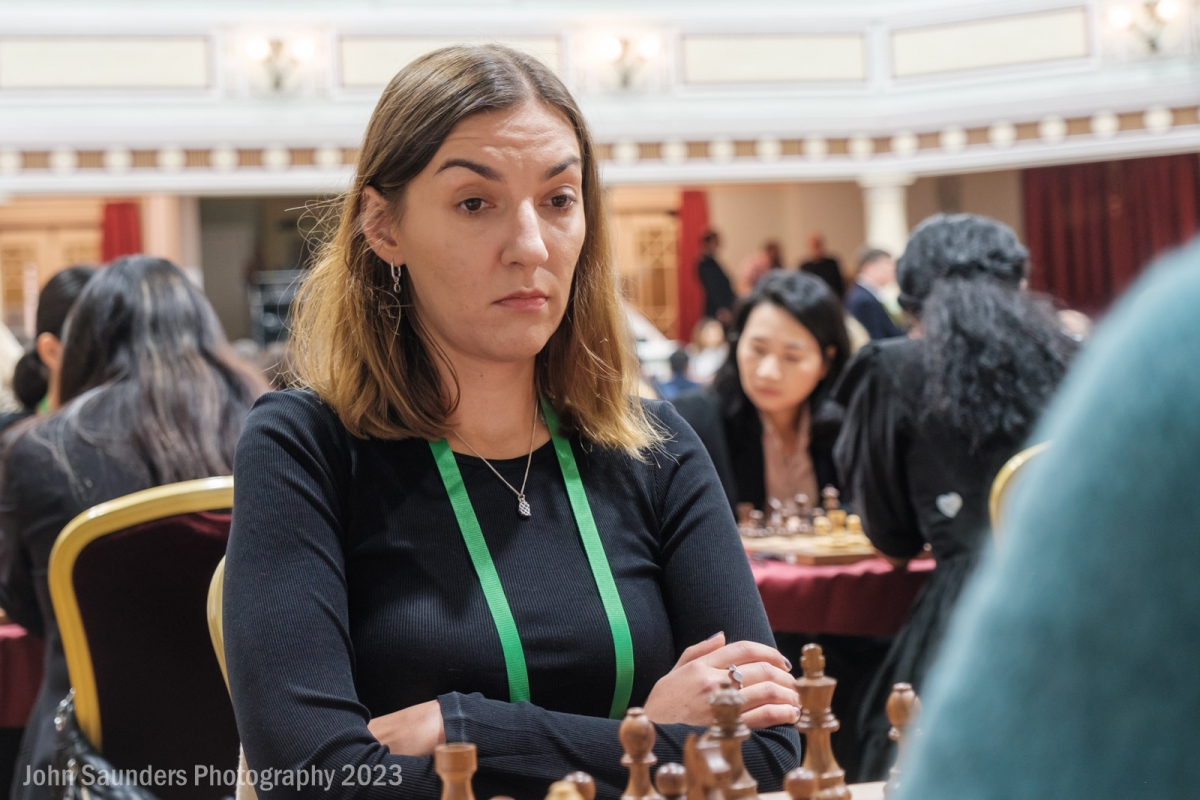
Irina Bulmaga (Romania) was the winner of a fascinating duel with her fellow countrywoman Mihaela Sandu
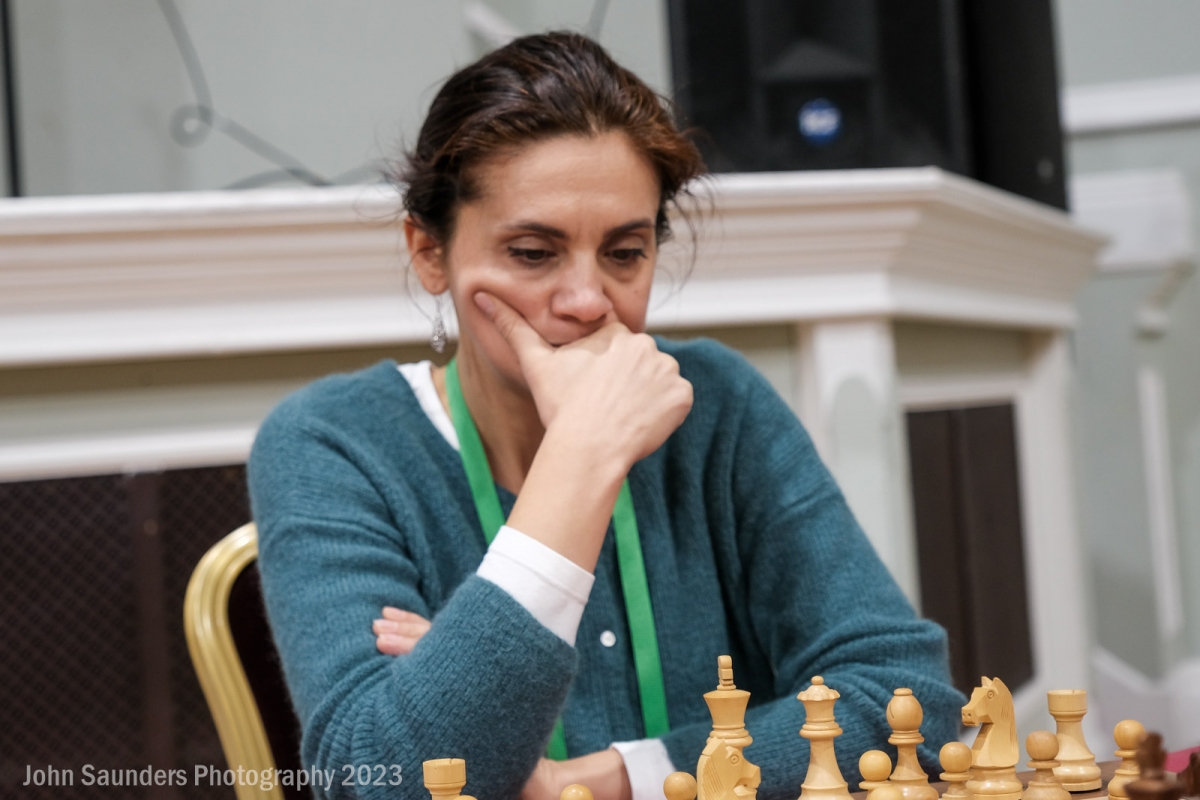
Mihaela Sandu played her part in a full-blooded encounter with her compatriot Irina Bulmaga
The all-Romanian game between Mihael Sandu and Irina Bulmaga began with the Siesta Variation of the Ruy Lopez, which, as innumerable chess hacks have been telling their readership for decades, is definitely not sleepy. The game lived up to the reputation of its sharp opening, veering down a number of strange paths only comprehensible to silicon. White might have won had she seen a couple of unfeasibly difficult Stockfish Specials around move 20 but thereafter Black navigated more effectively through the complications. A hugely entertaining game: credit to both players for their imagination and fighting spirit. I would annotate it for you but fear my brain might explode in the attempt.
Later edit: I’ve changed my mind – here are some notes to this entertaining game…
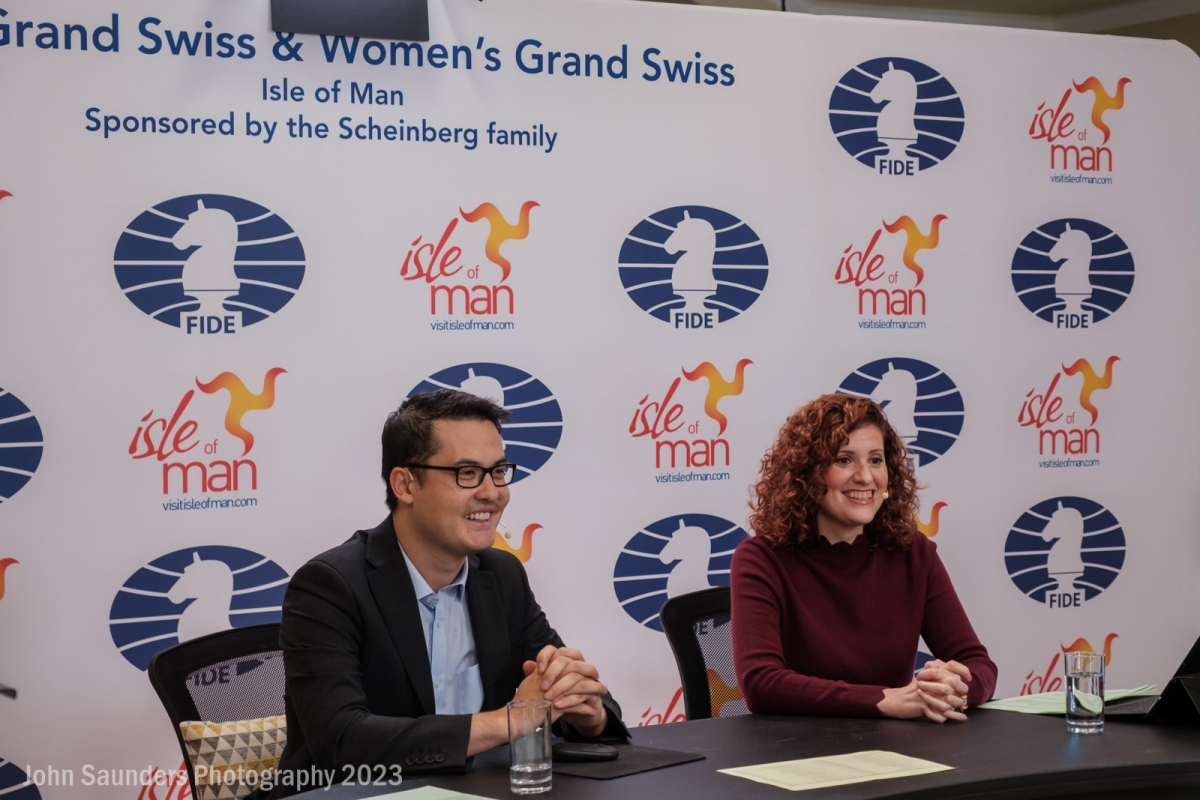
Indeed, credit to the players of both tournaments for providing us spectators with another feast of chess. There’s more fun tomorrow at the same time, so tune in once again to the David Howell and Jovanka Houska Show on iomchess.com