
John Saunders reports: Things livened up considerably in round four of the FIDE Grand Swiss, with four decisive games on the top ten boards. A new clear leader has emerged from the ten players who were tied on 2½/3 after three rounds, in the shape of Andrey Esipenko, who beat the new world junior champion Marc’andria Maurizzi to reach 3½/4. No fewer than 17 players are on 3 /4, including the top three seeds, Fabiano Caruana, Hikaru Nakamura and Alireza Firouzja. In the FIDE Women’s Grand Swiss, which featured 17 decisive games from 25 played, four players share the lead on 3½/4: Tan Zhongyi, Anna Muzychuk, Bibisara Assaubayeva and Rameshbabu Vaishali, with top seed Aleksandra Goryachkina amongst five players on 3.
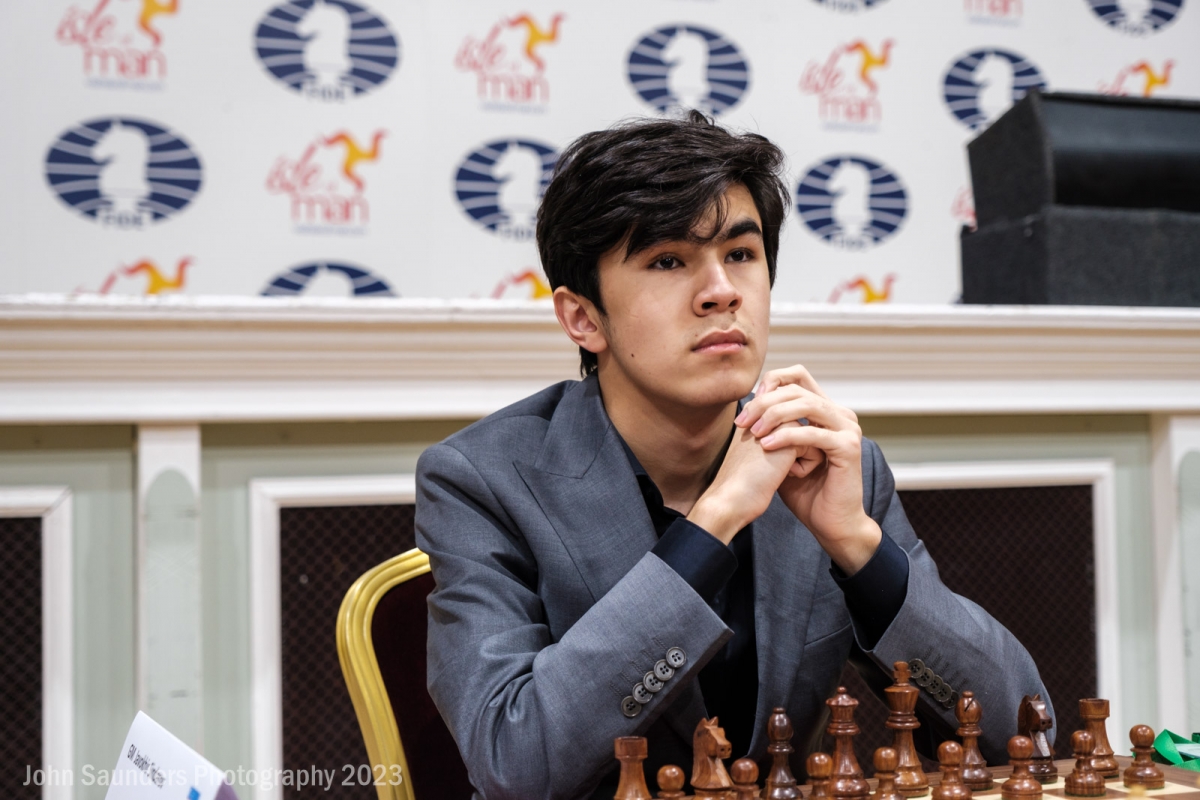
Javokhir Sindarov: brave enough to defend the King’s Indian Defence against a world class player
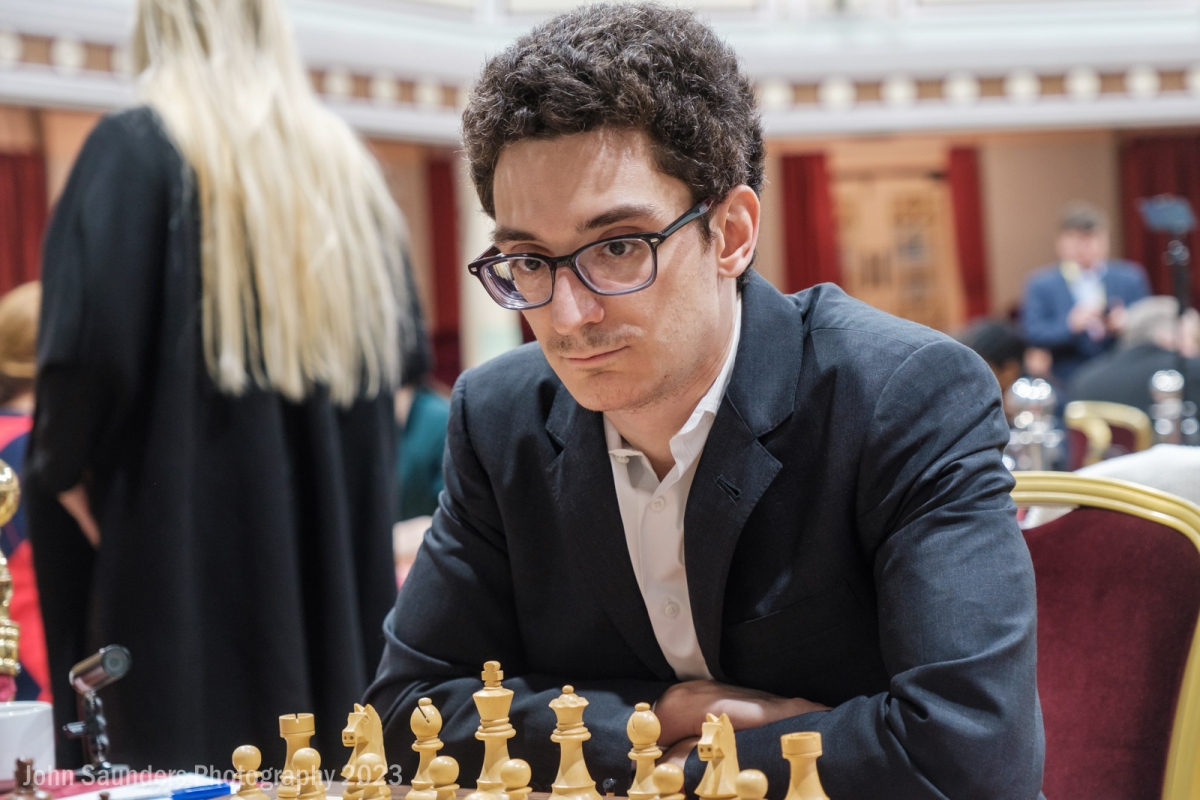
Javokhir Sindarov demonstrated his self-confidence by defending a King’s Indian Defence against Fabiano Caruana. Though popular at most levels of the game, the KID comes in for brutal treatment by elite players. However, this was very much an offbeat line, with Black playing two queen moves in the opening and then White opting for 11 Nxd5 when a pawn capture looked more thematic, with a typical King’s Indian grind in prospect. Instead, the board cleared rather more than is typical of the opening and meandered through to a 31-move draw.
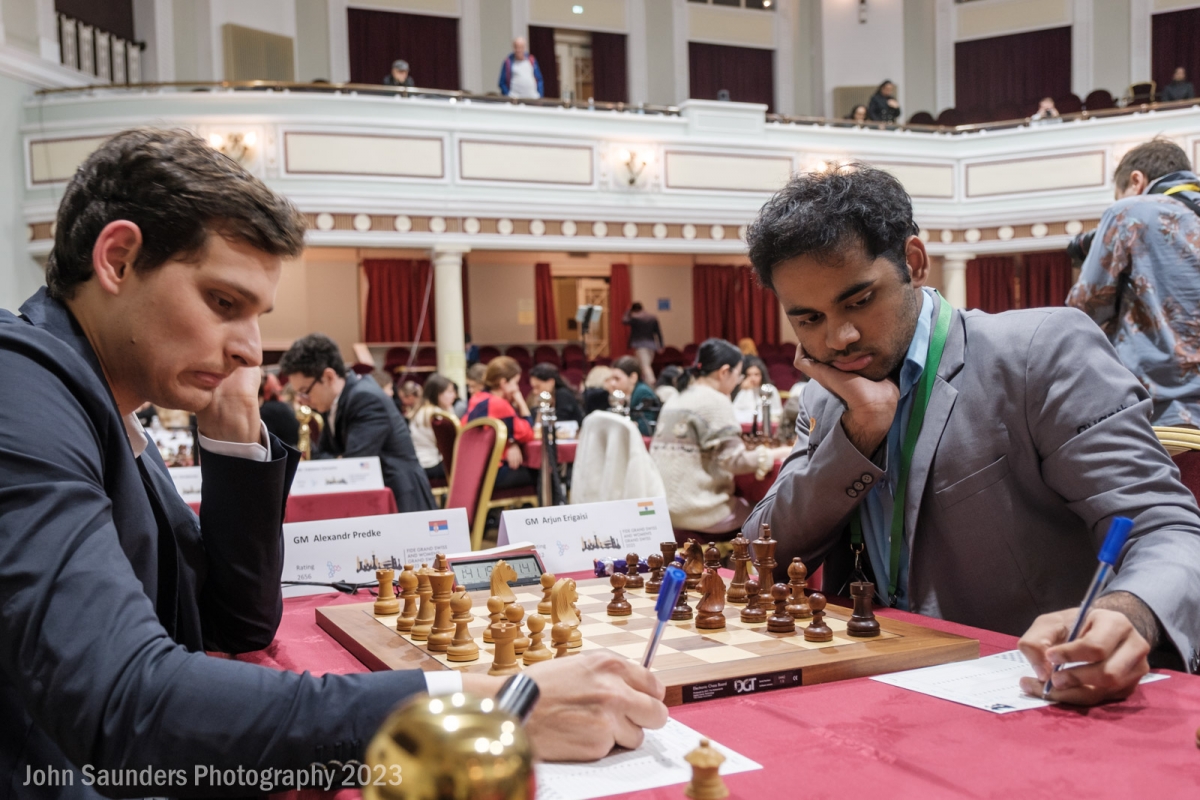
An enterprising game between Alexandr Predke and Arjun Erigaisi eventually ended in a draw – could Black have done better?
Alexandr Predke versus Arjun Erigaisi proved rather more lively, starting from a Semi-Tarrasch, and featuring a piece sacrifice by White to chase the black king into the middle of the board and gain pawns by way of compensation. Engines considered White to have insufficient compensation but it would have strained the human brain to work out why. Instead Black found a neat way to achieve perpetual check.
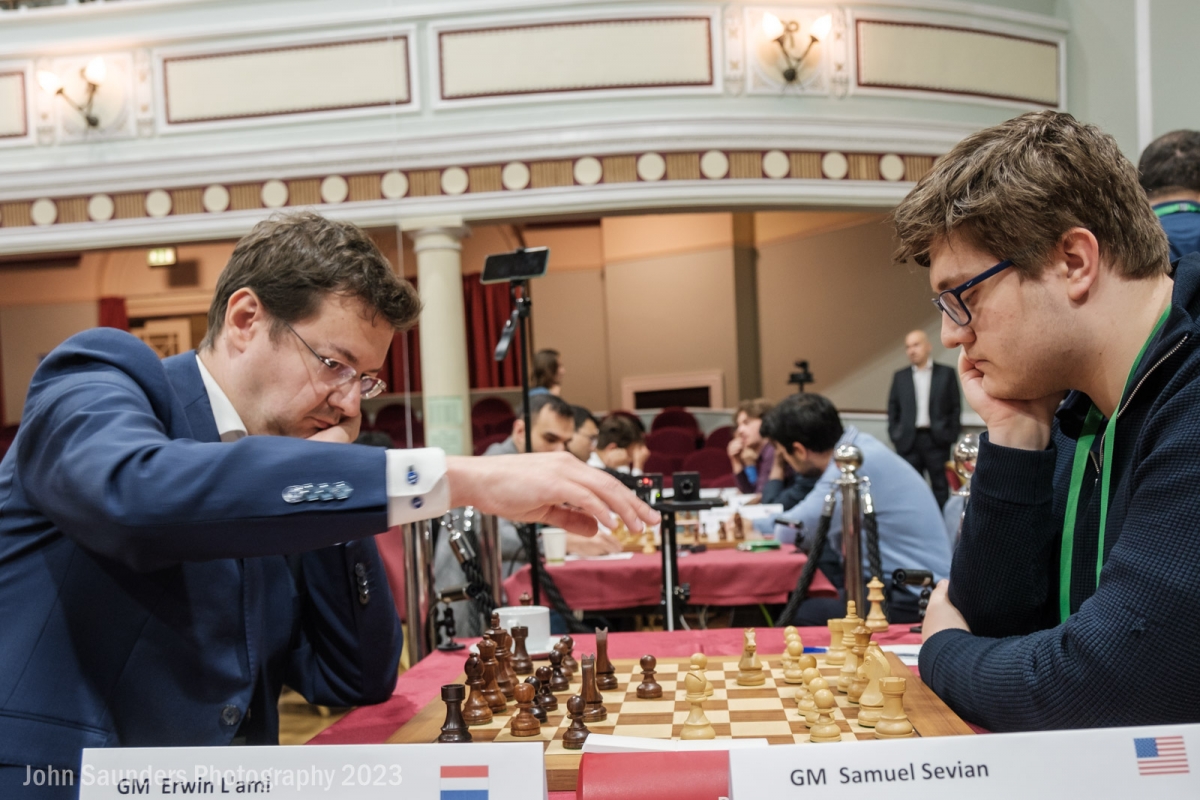
Erwin L’Ami refuses to bend the knee to higher rated opposition once again. Samuel Sevian came close to breaking his resistance.
Outrated for the fourth time in as many rounds, Erwin L’Ami managed to preserve his unbeaten by holding on against Samuel Sevian. The American, playing White, seemed to have established an edge around move 29 but L’Ami countered actively. There was a picturesque position in which all of Sevian’s pieces (bar pawns) were en prise, but none could be taken as mate would have followed, which necessitated the calculation of another configuration a few moves on in which those pieces were once again all en prise. The eventual outcome of all this delicate calculation was a draw, but a most entertaining one.
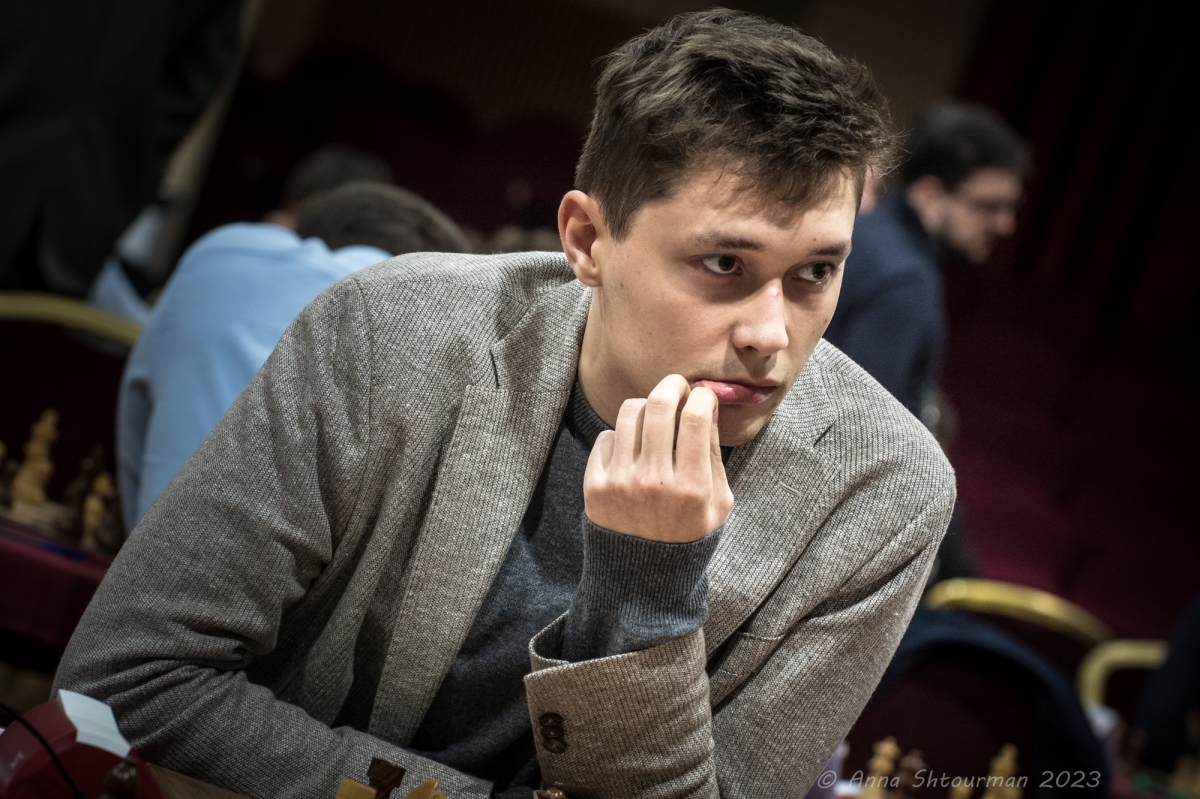
Andrey Esipenko has the honour of leading the tournament on his own after four rounds. Photo: Anna Shtourman
The overnight leader’s victory was scored from the black side of an anti-Marshall Ruy Lopez. Andrey Esipenko told interviewer Fiona Steil-Antoni after the game that he was happy to see his creative opponent Marc’Andria Maurizzi go in for the offbeat 14 c4 idea and thought 22 b3 was an error, after White doesn’t have much and Black can concentrate on attacking the e-pawn. The move 23…d5 undermined White’s game and Black soon broke through.
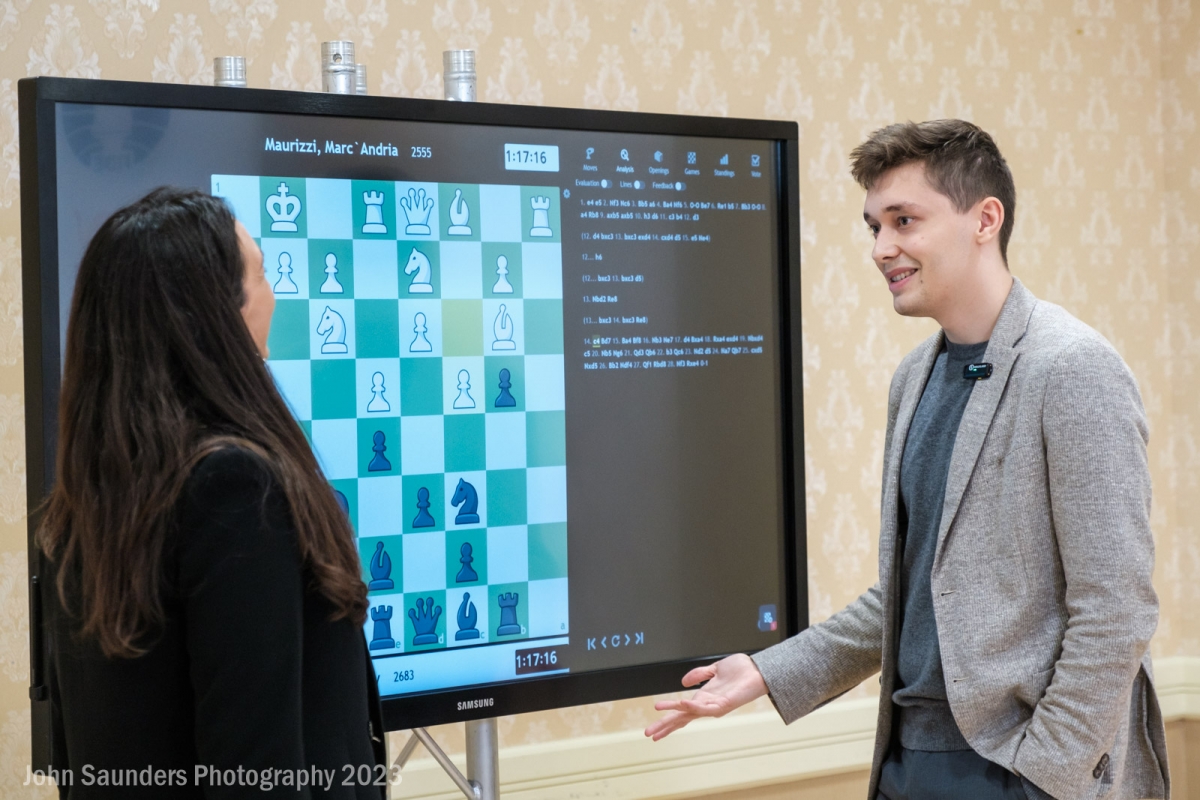
Andrey Esipenko’s only regret was not being able to watch his beloved Arsenal win 5-0 at football this afternoon!
The game between Alexey Sarana and Ramazan Zhalmakhanov was an evenly contested Semi-Slav. It lasted 48 moves but, in the end, neither player could hope for more than a draw.
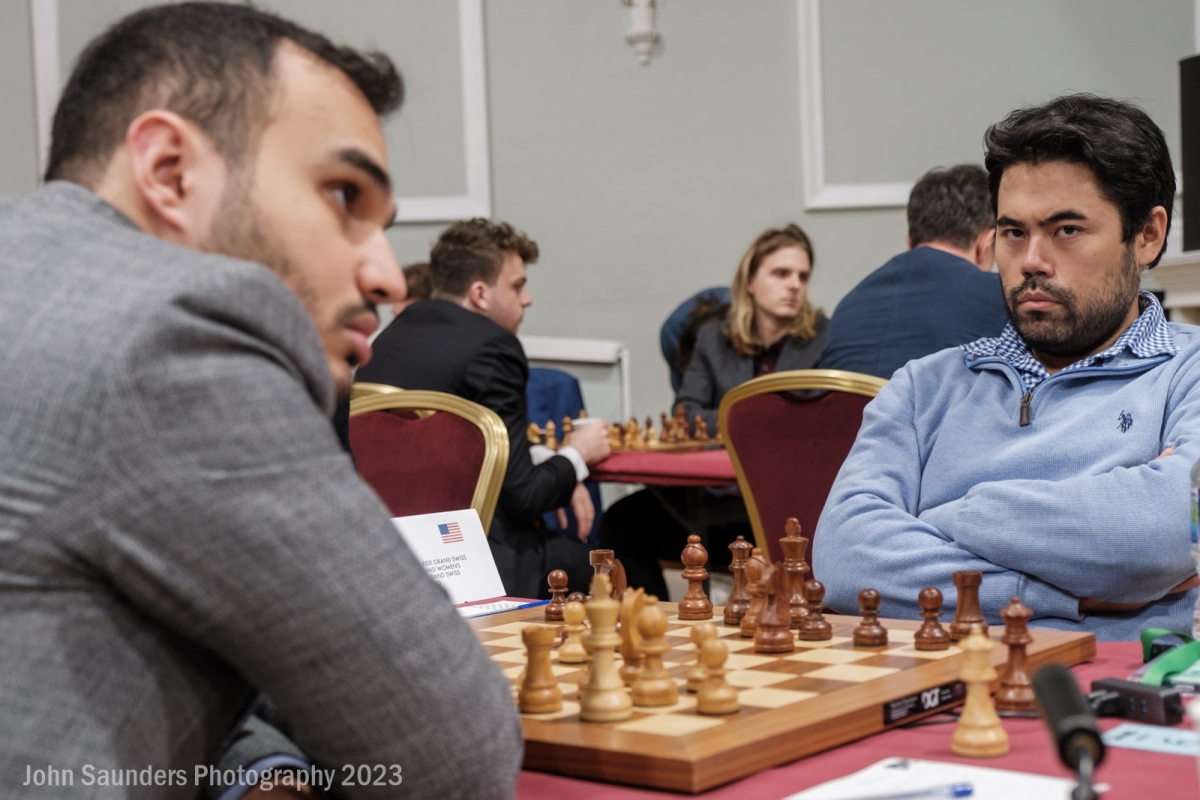
Hikaru Nakamura looks unhappy but he cheered up after winning against Amin Tabatabaei
Three of the games on the top ten boards were won with the black pieces, of which one was Hikaru Nakamura ’s win against Amin Tabatabaei. In his post-game match interview Nakamura criticised his opponent’s pawn advances on the flanks which didn’t achieve anything of significance. He was able to build up a counter on the kingside and secure an extra pawn, plus many threats with his rooks, which proved decisive.
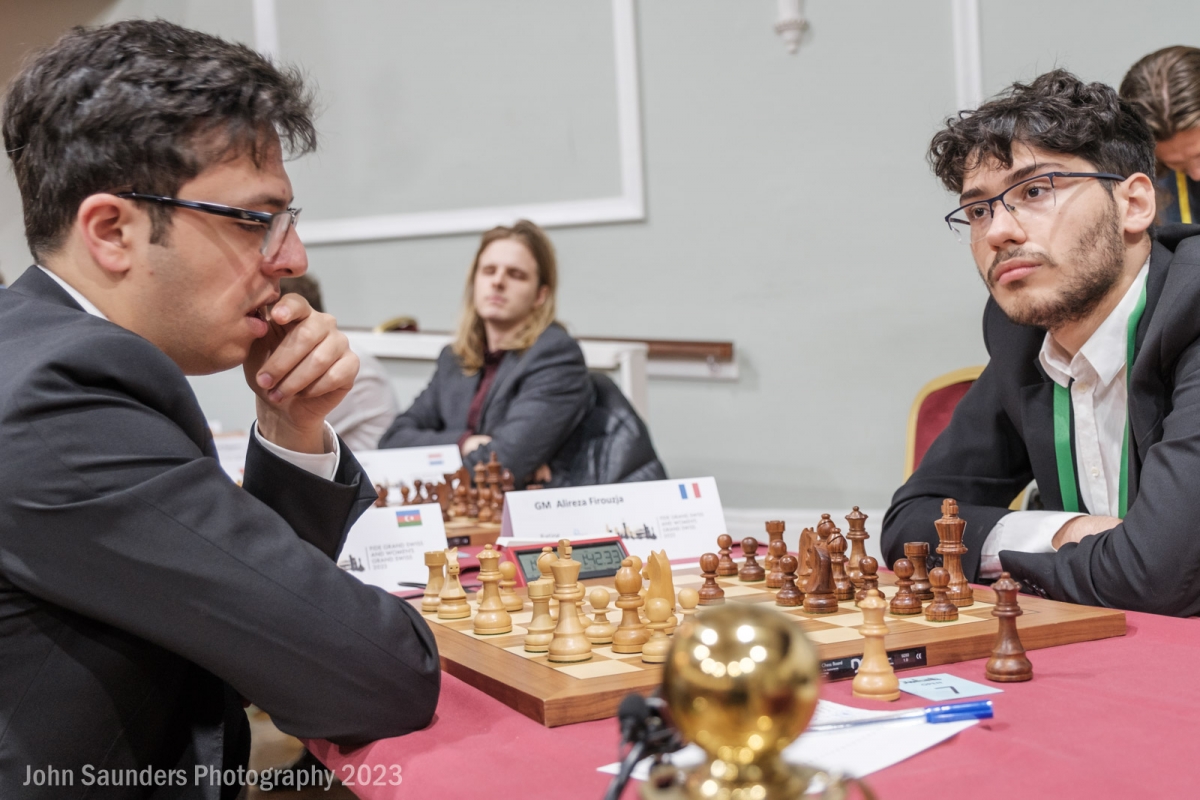
Nijat Abasov was unable to halt Alireza Firouzja’s progress in his quest to win a second FIDE Grand Swiss tournament,
Alireza Firouzja played the black side of a Catalan against Nijat Abasov and gradually took control in the middlegame, eventually forcing the win of the exchange. With reduced material and pawns on one side of the board, it was still problematic, but Firouzja eventually worked out a way to win.
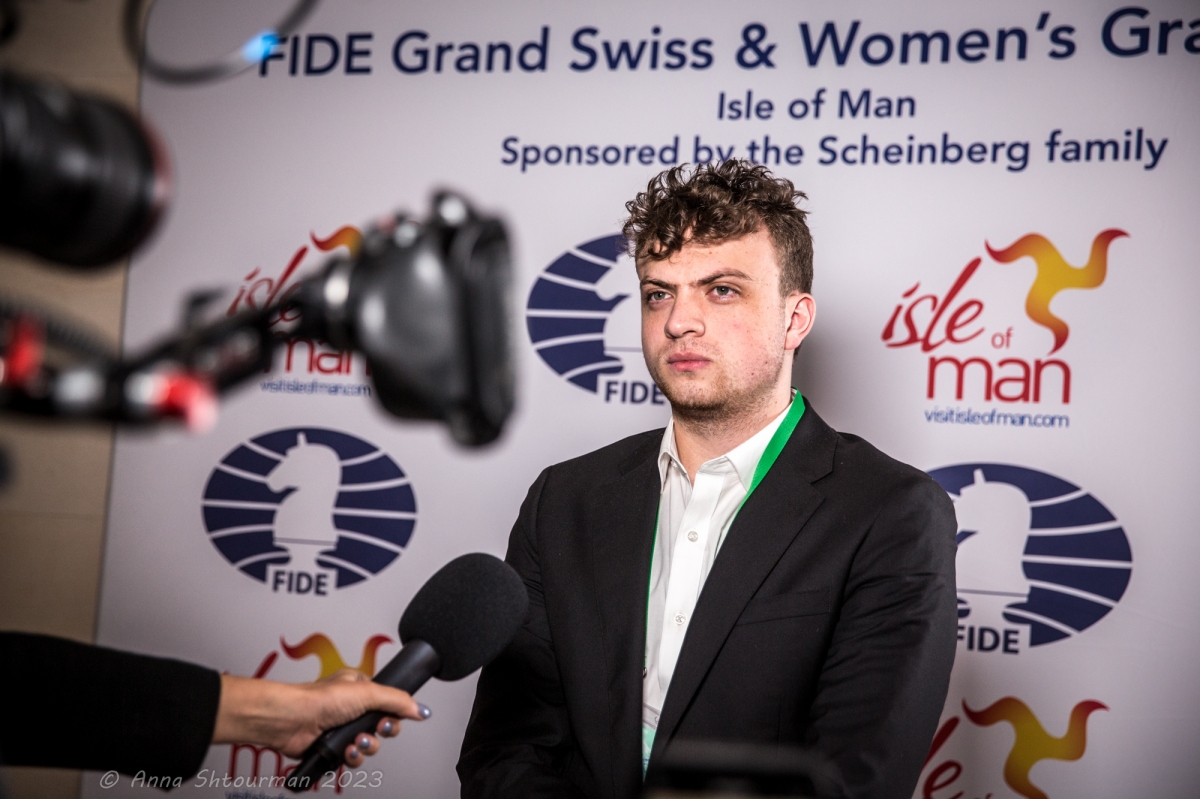
– A great scalp for Hans Niemann, who punished Richard Rapport’s risky pawn snatch. Photo: Anna Shtourman
Hans Niemann against Richard Rapport was a cagey game which looked level until the Hungarian unwisely grabbed a pawn on move 39. This allowed White to bring the full pressure of his pieces to bear on the queenside. The American soon finished the game with an attractive tactical sequence against Black’s king.
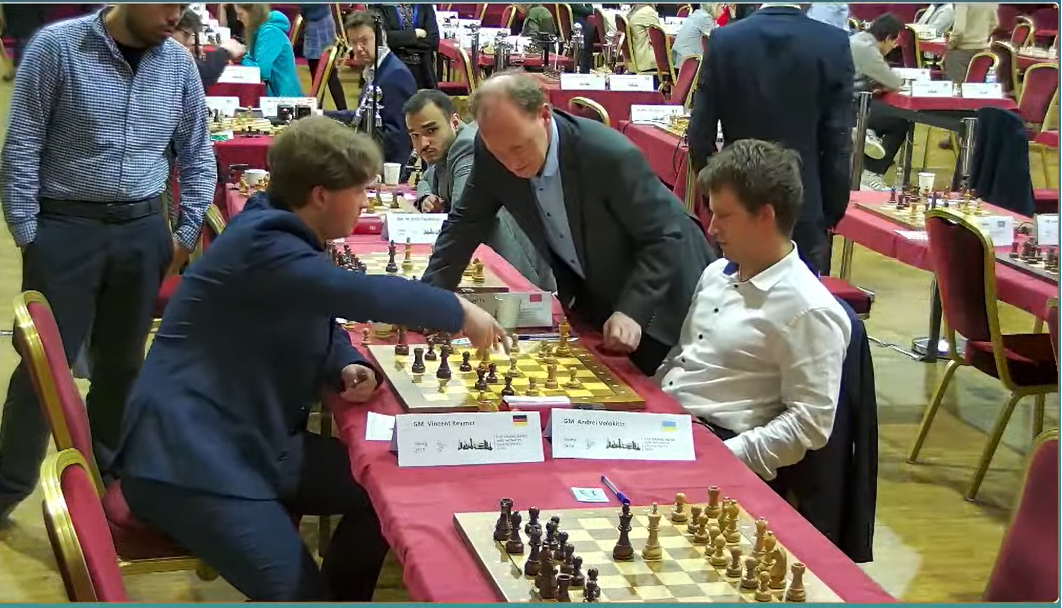
Vincent Keymer (left) explains to the arbiter what just happened while Hikaru Nakamura looks on. Andrey Volokitin looks resigned to his fate. Photo: FIDE video stream
There was a strange incident in the game between Andrei Volokitin and Vincent Keymer which was captured on video. The game seemed dead level when, on move 35 and very short of time, the Ukrainian momentarily touched his opponent’s c5-pawn with a view to capturing it, but in the same instant must have noticed that it lost a whole rook to a queen check on d1. He sat back in his chair to think what to do. The video camera showed his opponent giving him a meaningful look, as if to say “having touched my pawn, you are obliged to take it – so what is there to think about?” The two players then appeared to exchange comments, without any apparent sign of rancour. Volokitin then reached forward to play, not the obligatory 35 dxc5 but 35 Rxb6, at which point Keymer stopped the clock and called over an arbiter, who resolved the matter very quickly, again without any obvious disagreement between the players. Volokitin was obliged to play the pawn capture which was the last move on the official game score before 0-1 was recorded.
Now we’ve enjoyed an episode of ‘grandmasters behaving badly’ we should perhaps have a look at this example of ‘grandmasters playing badly’. My spies, posted all round the tournament room, alerted me to this game on board 52 between Adham Fawzy and Eduardo Iturrizaga. Perhaps using the adverb ‘badly’ is a bit harsh; maybe ‘adventurously’ is more generous. It is certainly an entertaining game, which shows how having a large material advantage is sometimes no substitute for king safety.
—
FIDE Women’s Grand Swiss: Round 4 Report
The FIDE Women’s Grand Swiss now has four leaders as mentioned at the start. It might well have had just the one had Anna Muzychuk taken her chances against Tan Zhongyi. The Chinese ex-world champion chose an indifferent plan against the Ukrainian’s unusual line against her Sicilian and was soon in considerable trouble. But despite having two extra pawns, Anna Muzychuk couldn’t hit upon a convincing plan to exploit her two-pawn advantage, one problem being the fact that they were unconnected. Steadily Tan Zhongyi clawed her way back into the game and gave up a piece for remaining pawns.
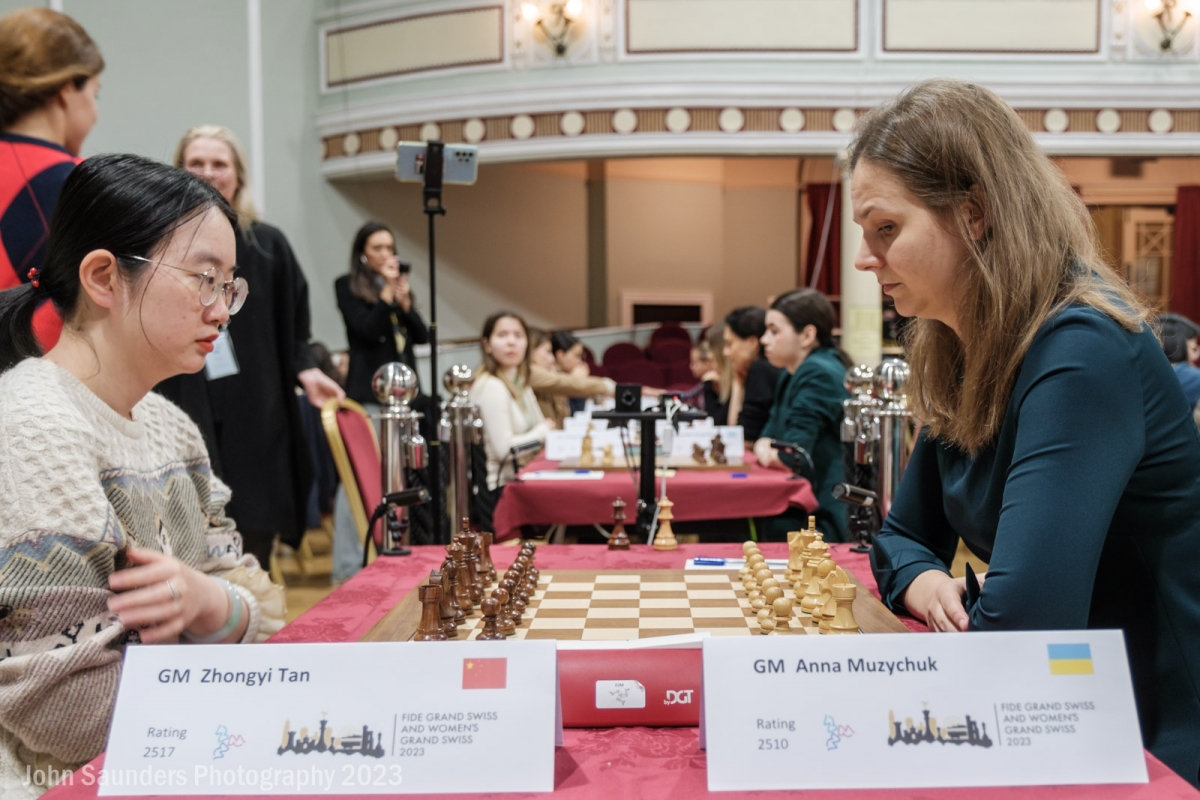
A determined rearguard action from Tan Zhongyi saved what looked like certain defeat against Anna Muzychuk
Bibisara Assaubayeva ’s opening against Elisabeth Paetz looked unthreatening, but the German may have been unwise to allow her opponent the two bishops, which soon dominated the board, and also erred with an ill-judged 21…a5. Though material remained level, White was able to apply unrelenting pressure against Black’s f7-pawn and double her rooks on the d-file. Eventually White managed to liquidate to a clearly won rook and pawns endgame.
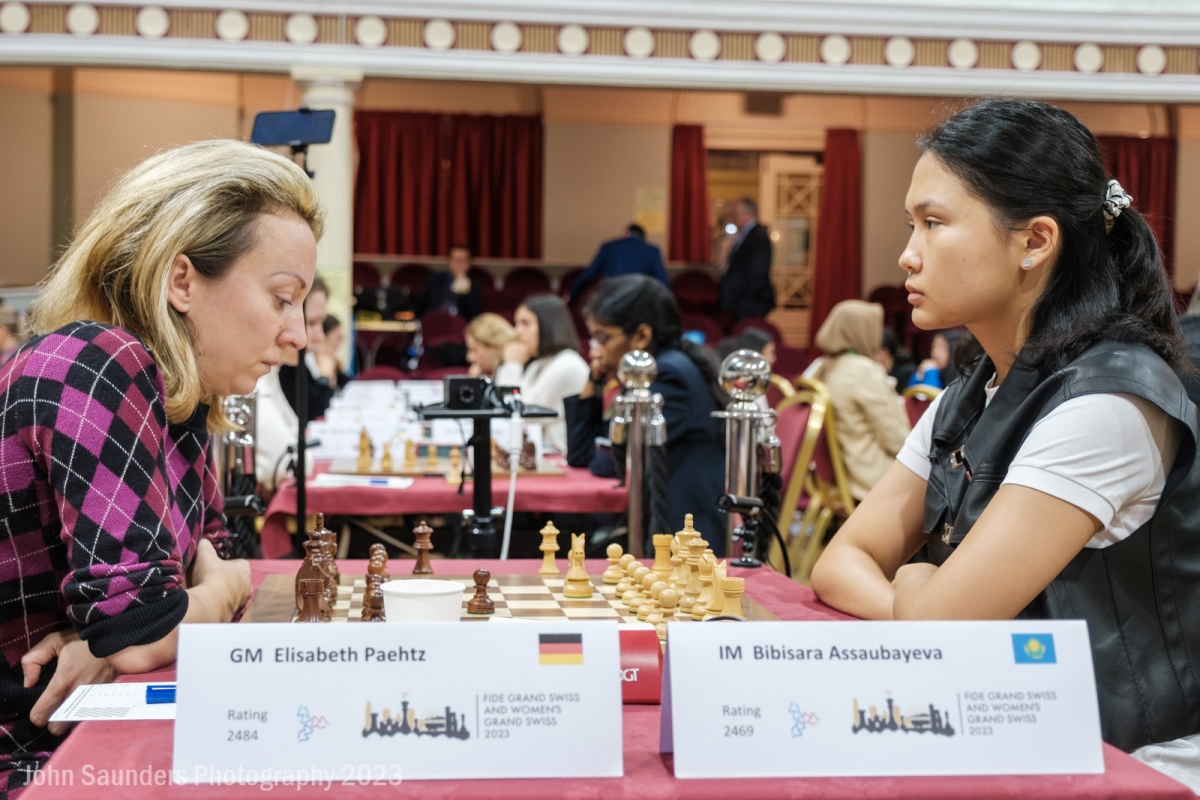
Bibisara Assaubayeva established a firm positional grip on her game against Elisabeth Paehtz and won with aplomb
Rameshbabu Vaishali ’s exceptional recent form shows she’s no longer simply Pragg’s elder sister but a formidable competitor in her own right. In round four she defeated ex-world champion Mariya Muzychuk in only 23 moves with Black. The opening was a Sicilian with Bb5 and seemed about level until White embarked on a mistaken plan with Qh4, e6 and Bg5. Black ignored this and concentrated her counter-offensive on the weakened light squares close to the white king. Once Black had played 20…Rd2 it was clear whose plan was succeeding and White lasted only three more moves before resigning.
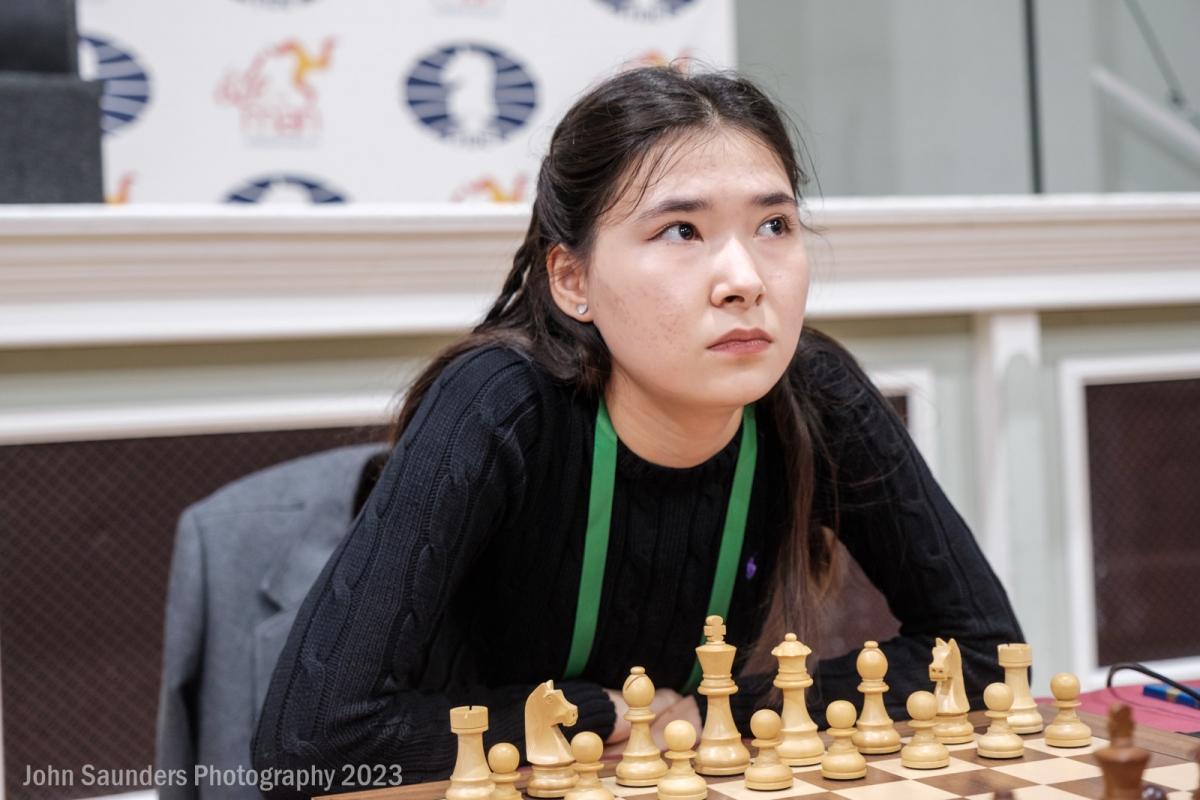
18-year-old Kazakh WGM Meruert Kamalidenova played another impressive game to defeat Polina Shuvalova
It was curious to note that, of the seven players rated 2500 or more in the FIDE Women’s Grand Swiss, no fewer than four of them lost in round four. One of them was Mariya Muzychuk, the other three being Polina Shuvalova (defeated by the talented Meruert Kamalidenova), Harika Dronavalli (who lost to Batkhuyag Munguntuul) and Alexandra Kosteniuk (beaten by Leya Garifullina). This left Anna Muzychuk and Tan Zhongyi, whom we have seen drew with each other, and the one winner – Aleksandra Goryachkina, the top seed, who beat Ulviyya Fataliyeva. Perhaps there is a changing of the guard at the top of women’s chess, though there is plenty of time for the established players to reassert themselves in the seven rounds to come.